
Better Sleep Starts at Home
Professional sleep apnea testing in the comfort of your own bed. Trusted, non-invasive restorative care designed for your peace of mind.
About Sleep Apnea
Sleep apnea is a common condition in which breathing repeatedly pauses or becomes very shallow during sleep. These repeated breathing interruptions can lower oxygen levels and disrupt sleep quality, even when a person does not fully realize it is happening.
What is happening during sleep?
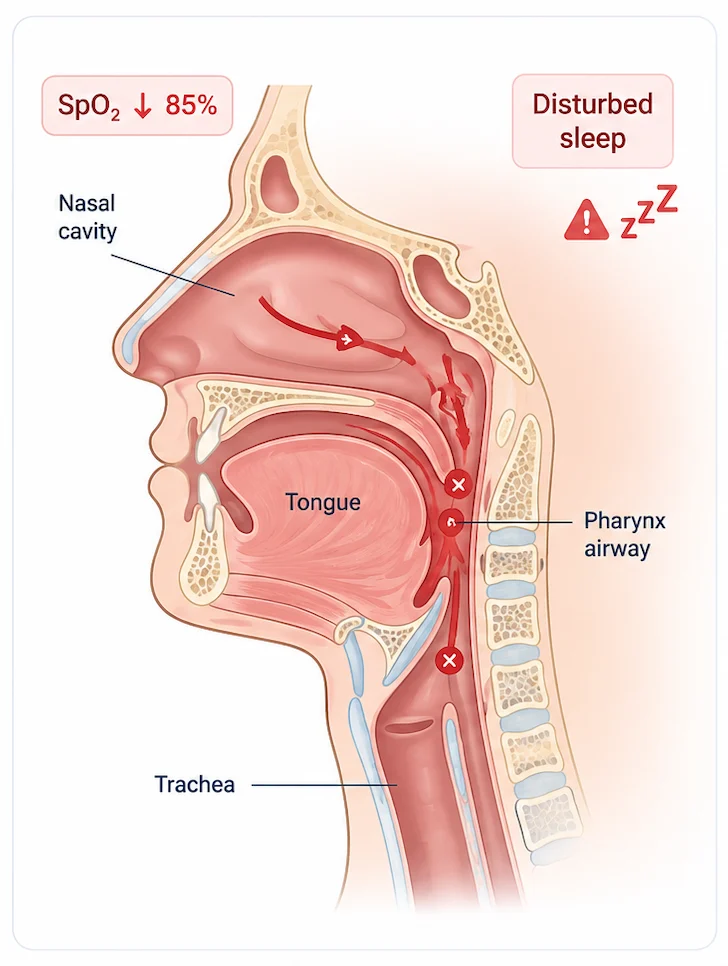
In the most common form, obstructive sleep apnea, the upper airway narrows or closes during sleep. That can cause snoring, choking, gasping, or brief pauses in breathing that may happen again and again through the night.
Signs patients often notice
Many people come in because they feel exhausted, foggy, or wake with dry mouth or headaches. Others only learn something is wrong after a partner notices loud snoring, gasping, or breathing that starts and stops.
Why testing matters
Untreated sleep apnea has been linked to problems with concentration, memory, decision-making, and daytime alertness, and it can also raise the risk of serious health issues such as heart attack and stroke.
What changes when the airway is supported?
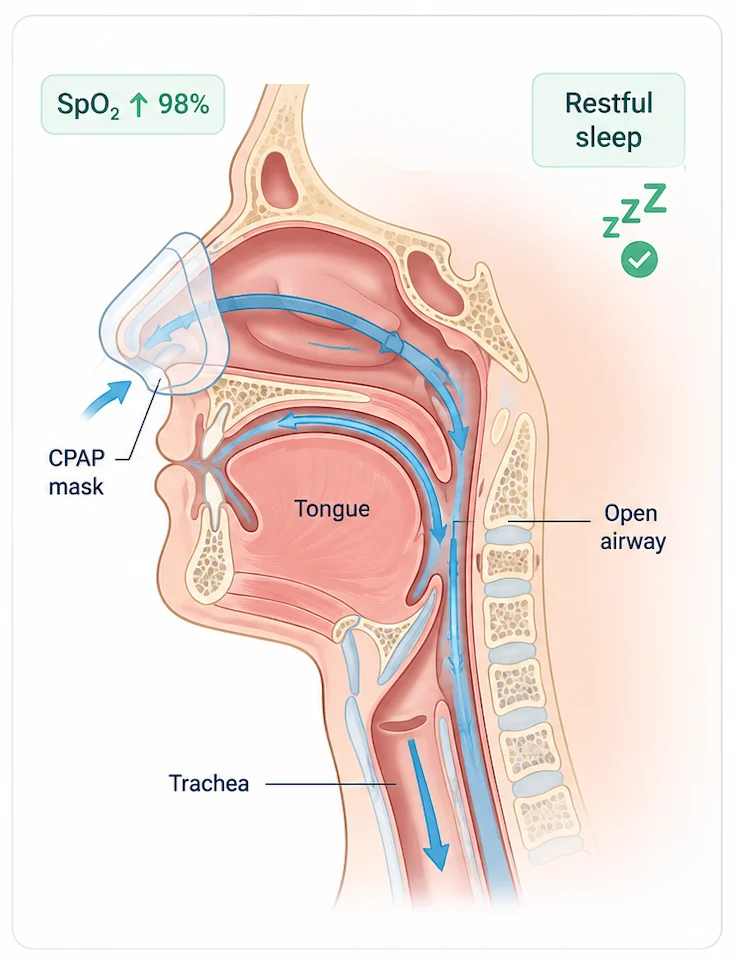
This simplified side-view diagram shows the head, tongue, throat, and airway. In obstructive sleep apnea, the tissues of the throat relax and the passage behind the tongue becomes too narrow. CPAP uses gentle air pressure to help hold that space open.
Clear answers can lead to better sleep and better health
The value of testing is not just getting a label. A sleep test helps show whether your symptoms are truly related to disrupted breathing, how often events are happening, and how urgently treatment should be considered.
That clarity can make the next step feel much less overwhelming. Instead of guessing, you and your clinician can make decisions based on real information from your sleep.
Treatment options patients should know about
CPAP is one of the most effective and most common treatments because it delivers constant air pressure through the nose or mouth to keep the airway open during sleep. Other PAP options, including BPAP and APAP, may be appropriate for some patients.
Other treatments can also help depending on the cause and severity of apnea. These include oral appliances that reposition the jaw or tongue, side-sleeping or positional changes, mouth and facial muscle therapy, and in selected cases surgery or implanted nerve stimulation.
How other factors can affect sleep apnea
Weight can make a meaningful difference for many people with obstructive sleep apnea because extra tissue around the neck and upper airway may increase narrowing. Regular physical activity, healthy sleep habits, limiting alcohol and caffeine, quitting smoking, and maintaining a healthy weight are important aspects of treatment.
That said, weight loss is not the whole story. Thin people can still have sleep apnea, and many patients still need a device or other therapy even while working on long-term lifestyle changes.
Common treatment categories
- PAP therapy: CPAP, APAP, or BPAP to keep the airway open with pressurized air.
- Oral appliances: custom-fitted devices that move the jaw or tongue forward.
- Lifestyle and positioning: weight management, exercise, side sleeping, smoking cessation, and reducing alcohol use.
- Other options in selected cases: muscle therapy, surgery, or implanted nerve stimulation.
Dedicated to Restorative Care
As a small, specialized sleep facility in Connecticut, we prioritize patient comfort and clinical excellence over volume. You aren't just a number; you are a neighbor seeking better health, and we are here to guide you every step of the way.
Simple 4-Step Process
Getting tested is easier than you think. Our streamlined approach ensures you get the answers you need without unnecessary stress.
Consultation
Your doctor can send us a referral or we can arrange for you to see one of our sleep physicians.
Get the Device
Most patients will pick up the device at our facility, although in some cases it will be shipped directly to you.
Sleep & Test
Wear the device for one or two nights while you sleep normally.
Results
Return the device. A board-certified physician will interpret your results and share them with you or your referring practitioner, who will provide follow-up care.
Contact The Connecticut Sleep Lab
If you have questions about sleep apnea testing, referrals, or next steps, send us a message and we will follow up as soon as possible.
Located in
Starling Physicians New Britain
Phone
(860) 770-6748Fax
(860) 656-7627
Address
300 Kensington Ave
New Britain, CT 06051